The EU Ruling Behind CSS (AT.39740): Why Google Must Offer It

Founder · Gezar & TheCSSPartner
Runs Gezar and TheCSSPartner, an authorised Comparison Shopping Service for Google Shopping. Grenaa, Denmark (CVR 42476226).
5 min
The up to 25% more bid power a Comparison Shopping Service gives you is not a discount Google chose to offer. It exists because the European Commission ordered Google to open Google Shopping to rival comparison services on equal terms, after finding that Google had abused its dominant position. This article explains the ruling behind CSS, case AT.39740, in plain terms: what Google did, what the Commission decided, how the courts responded, and what it all means for your Shopping bids.

The short version
In June 2017, the European Commission concluded a multi-year investigation and ruled that Google had abused its dominance as a search engine by giving its own comparison shopping service, Google Shopping, an illegal advantage over competing services. The Commission fined Google €2.42 billion, the largest competition fine it had imposed at that point, and required Google to treat rival Comparison Shopping Services equally. That equal-treatment requirement is what makes third-party CSS access, and the extra bid power that comes with it, possible.
What Google did
The investigation centred on how Google presented shopping results in its general search engine. The Commission found that Google had systematically given prominent placement to its own comparison shopping service while demoting competing comparison services in its search results.
In practice, this meant that when people searched for products, Google's own Shopping results appeared in prime positions, while rival comparison shopping sites were pushed far down the rankings where they received little traffic. Because Google held a dominant position in general search across Europe, this self-preferencing had a large effect on which services consumers saw and used.
The Commission concluded this was an abuse of Google's dominant market position under EU competition law.
The decision: 27 June 2017, case AT.39740
On 27 June 2017, after a formal investigation that ran for several years, the European Commission adopted its decision in case AT.39740. The findings were:
- Google held a dominant position in general internet search in the European Economic Area.
- Google had abused that dominance by favouring its own comparison shopping service over competitors in its search results.
- The conduct breached EU competition rules.
The Commission imposed a fine of €2.42 billion. At the time, it was the highest fine the Commission had ever levied for a competition law breach.
Crucially, the decision did not stop at a fine. It required Google to bring the infringement to an end and to treat competing comparison shopping services equally to its own.
The remedy: equal treatment, and how CSS works
The remedy is the part that matters for advertisers. Google was required to give rival comparison shopping services access to the Shopping auction on equal terms with its own service.
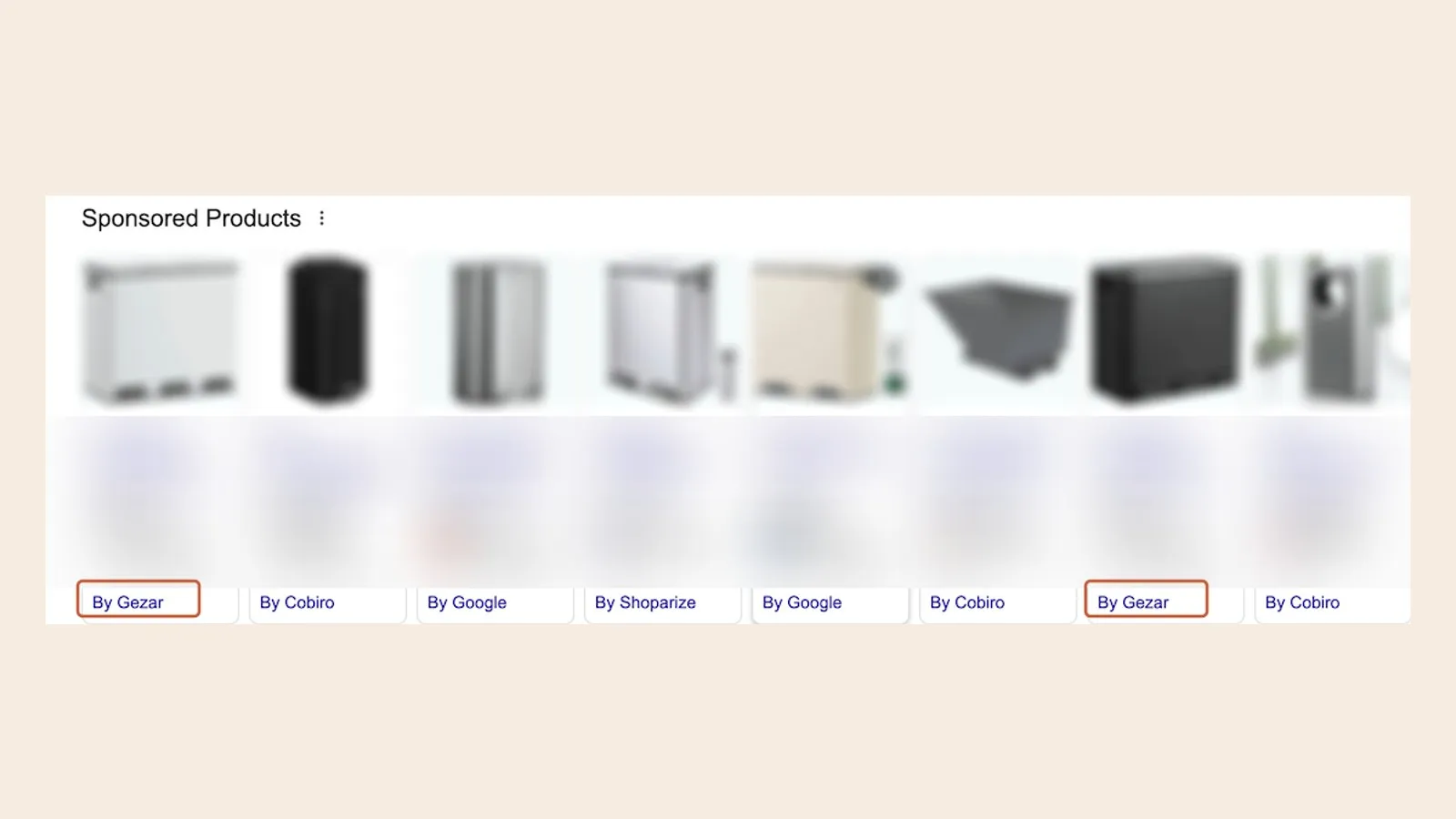
This is the legal foundation of the modern CSS programme. An authorised Comparison Shopping Service can submit product listings to Google Shopping on behalf of merchants, and those listings compete in the same auction that Google's own Shopping uses, on equal terms.
The extra bid power that merchants get through an authorised CSS flows directly from this equal-access structure. When ads run through Google's own Shopping service, a margin of up to 20% is taken before the bid enters the auction. When they run through an authorised CSS, the full bid enters the auction directly. Equal access is what removes that margin, and the regulation is what guarantees equal access.
a right Google must offer
The appeals: upheld, not overturned
Google did not accept the decision quietly. It appealed.
The case worked its way through the EU court system. The General Court of the European Union largely upheld the Commission's decision in 2021, dismissing Google's appeal in substance and confirming the finding of abuse.
Google appealed again to the Court of Justice of the European Union, the EU's highest court. In 2024, the Court of Justice dismissed Google's final appeal and confirmed the Commission's decision and the €2.42 billion fine. That brought the case to a definitive close at the highest judicial level.
In other words, this is not an open dispute or a theory. It is settled law, confirmed through the EU's full appeals process up to its highest court.
Why this matters for your Shopping costs
The chain is simple:
1. The Commission found Google abused its dominance and ordered equal access for rival CSS providers (2017, AT.39740). 2. The EU courts upheld that decision, with the Court of Justice confirming it in 2024. 3. Equal access means an authorised CSS can put your full bid into the Shopping auction directly. 4. That direct access is what produces up to 25% more bid power.
So the saving is not a promotion that can be withdrawn at a marketing department's whim. It is a structural feature created by EU competition enforcement and protected by a final court ruling. As long as Google operates Shopping in Europe, authorised CSS providers have the legal right to participate on equal terms.
Bid power estimate
Illustrative EUR inputs, not a quote or guaranteed saving. Figures describe the margin of up to 20% that Google's own CSS takes off each bid, which is the same as up to 25% more bid power through an independent CSS. Whether it shows up as lower click prices, more clicks or better positions varies with market, feed quality and competition. The monthly CSS fee is subtracted.
Is the saving safe long-term?
This is the natural question, and the legal record is reassuring. The obligation on Google to offer equal access has survived Google's own appeals all the way to the Court of Justice of the EU and was confirmed in 2024. The structural requirement is in active operation across the European CSS markets. Programme details can evolve over time, as any regulated framework can, but the underlying requirement to offer CSS access has been tested in court and upheld.
The bottom line
Your CSS saving rests on one of the most significant competition rulings in EU history. The Commission found Google abused its dominance, fined it €2.42 billion, and ordered equal access for rival comparison shopping services in case AT.39740 on 27 June 2017. The EU courts upheld that decision, with final confirmation by the Court of Justice in 2024. That ruling is why an authorised CSS takes part in the Shopping auction on equal terms, so your full bid competes. It does not set a percentage: Google does not publish the margin its own CSS keeps, and around 20% is the figure commonly cited in the industry.
See how a CSS gives you up to 25% more bid power, check the pricing, or get started.
Frequently asked questions
What is case AT.39740?
How big was the fine?
Did Google appeal, and what happened?
How does this ruling create the CSS saving?
Can Google remove the CSS programme?
See it on your own account
Usually live within 24 hours, from 11.66 €/month per shop, every live CSS country included, no contract.
Get started